Roofing Company SEO Case Study: Two Roofers, 14 Searches, None Went Backward
One roofer in a crowded Pennsylvania county, one in the Phoenix metro. Different markets, same problem: homeowners couldn’t find them on the map. Here’s what I did for each, and the scans that show what happened.
Why Roofing Company SEO Is a Map Pack Game
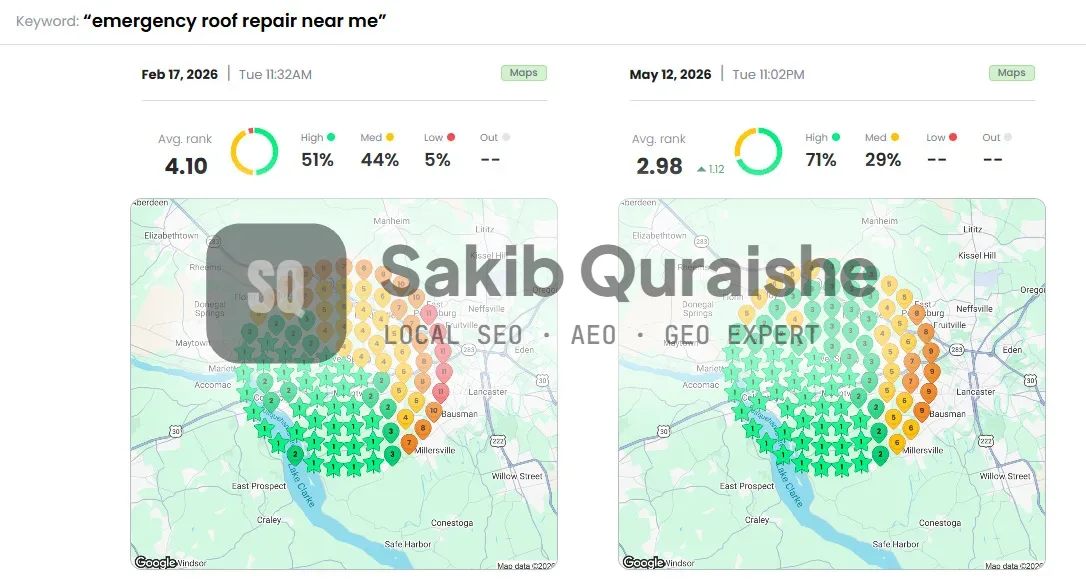
Nobody researches roofers for fun. A homeowner finds a leak after a storm, searches “emergency roof repair near me” and calls whoever looks trustworthy in the top three on the map. That call is often a five-figure job.
So for roofing company SEO, I measure everything on a map grid. A roofer can rank well outside their own office and still be invisible two towns over, exactly where half their jobs come from.
What I watch for with every roofer
Demand spikes with storms, so the profile has to be strong before the season, not during it.
Roofers often also sell siding and gutters, and those services usually rank far worse than roofing.
Competitors have years of reviews and links, so trust has to be built steadily, month after month.
Phone calls and direction requests matter more than website traffic. That’s what I report on first.
Roofing, Siding & Gutter Contractor in Lancaster County
This contractor sold three services, but only roofing was being found. Siding and gutter searches sat on pages two and three. Six months later, organic clicks had more than tripled, calls from Google more than doubled, and all eleven tracked searches had moved up.
Google Business Profile, March to July 2026
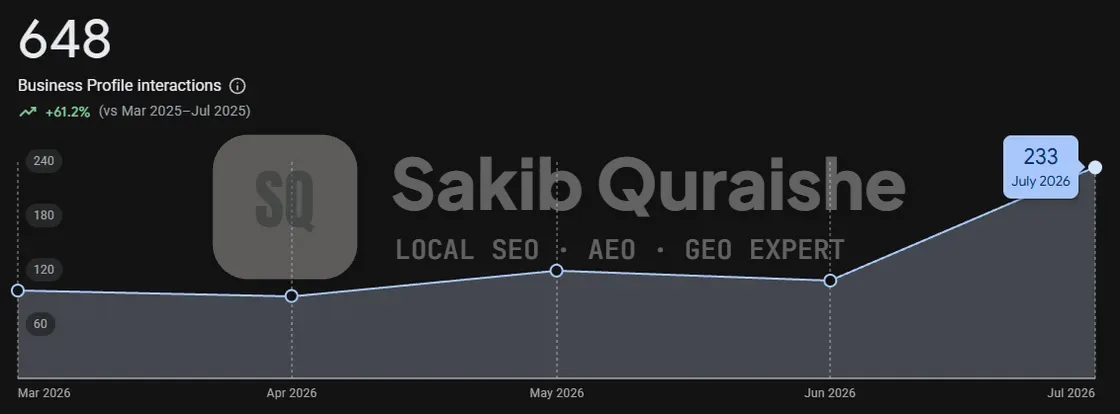 233 in July alone.
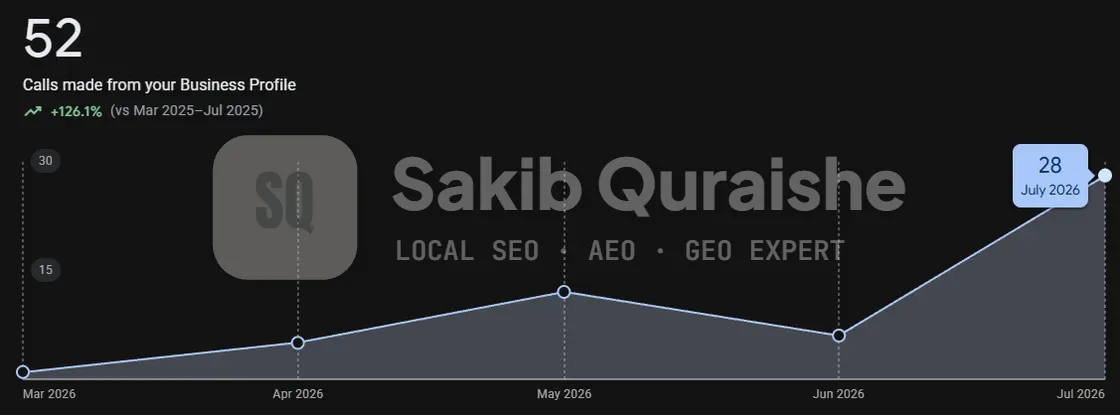 28 in July alone.
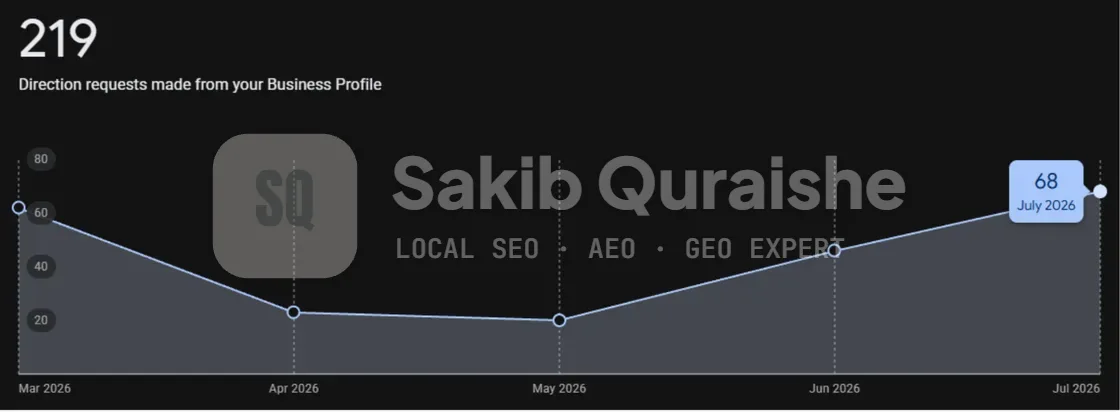 68 in July. No year-over-year figure reported.
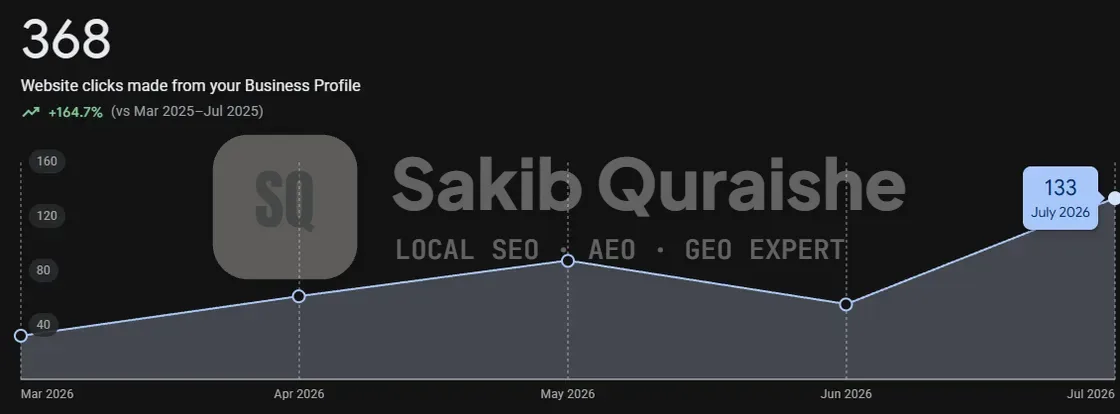 133 in July alone.
Calls more than doubled compared with the same five months a year earlier. For a roofer, that’s the number that pays the bills.
Website in Google Search
| METRIC | BEFORE | AFTER | CHANGE |
|---|---|---|---|
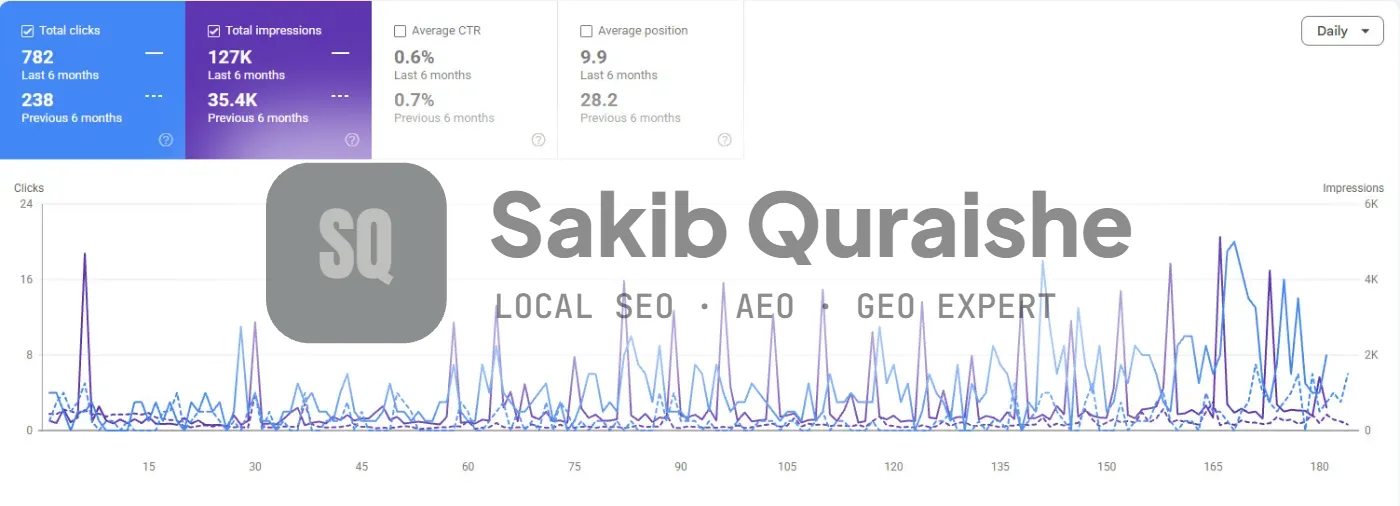
Previous six months vs the last six. The site now shows for a much wider set of searches, so click-through rate dipped slightly even as total clicks more than tripled.
Map grid scans, before and after
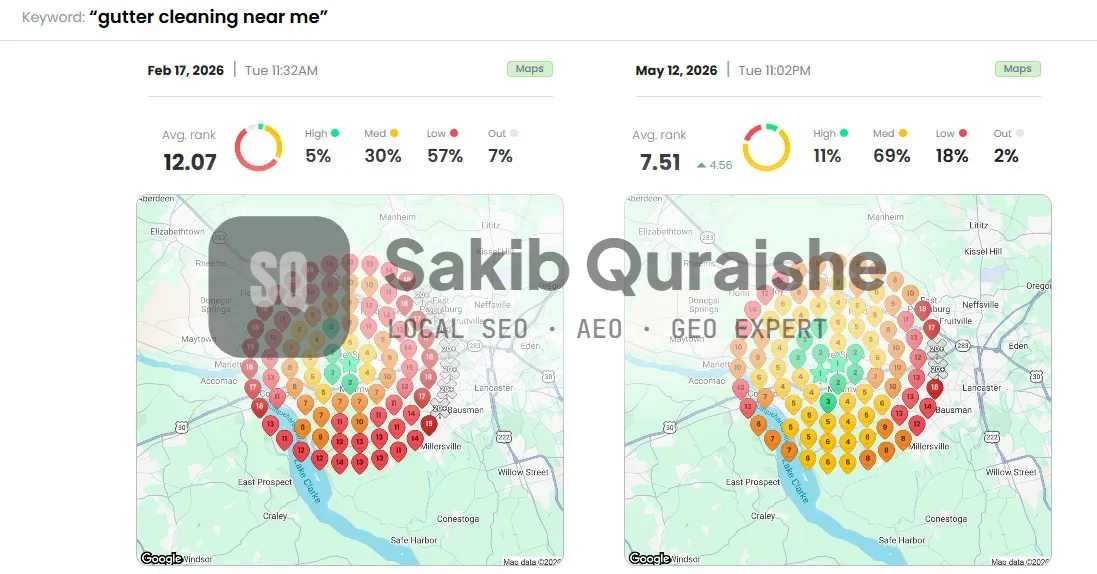
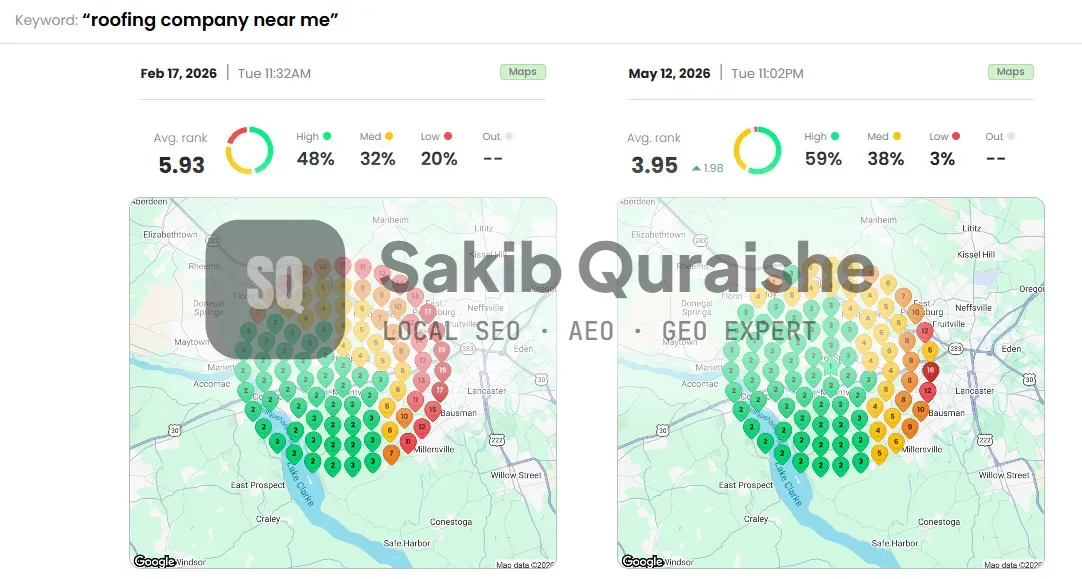
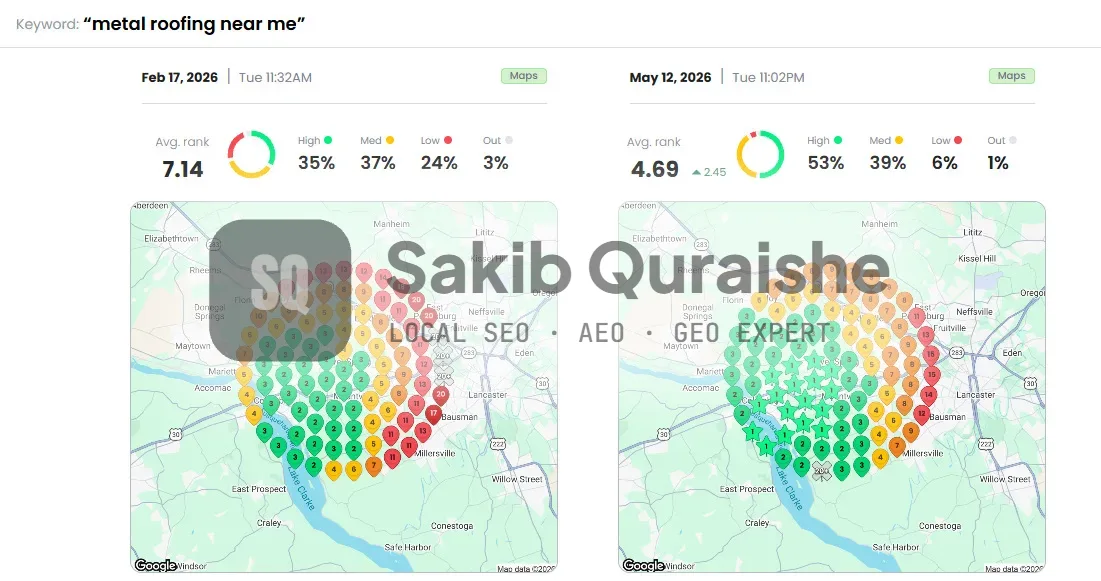
| SEARCH | 17 FEB | 12 MAY | GAIN | COVERAGE |
|---|---|---|---|---|
Two of three services were invisible. Roofing ranked fine; siding and gutters sat on pages two and three.
The website averaged position 28.2. Page three. The service pages existed, they just weren’t being found.
The profile went quiet for long stretches. Competitors posting weekly looked far more active.
Service descriptions were thin. Google had little to match the profile to siding and gutter searches.
Nobody was tracking rank by area. There was no way to see which townships were weak.
Single-Location Roofing Contractor in the Phoenix Metro
A single-location roofer in one of the most crowded roofing markets in the Southwest, with zero top-of-map coverage on every core search. In about four months, all three searches gained real map presence, the site climbed nearly nine positions, and direction requests rose 48.2%.
Google Business Profile, March to July 2026
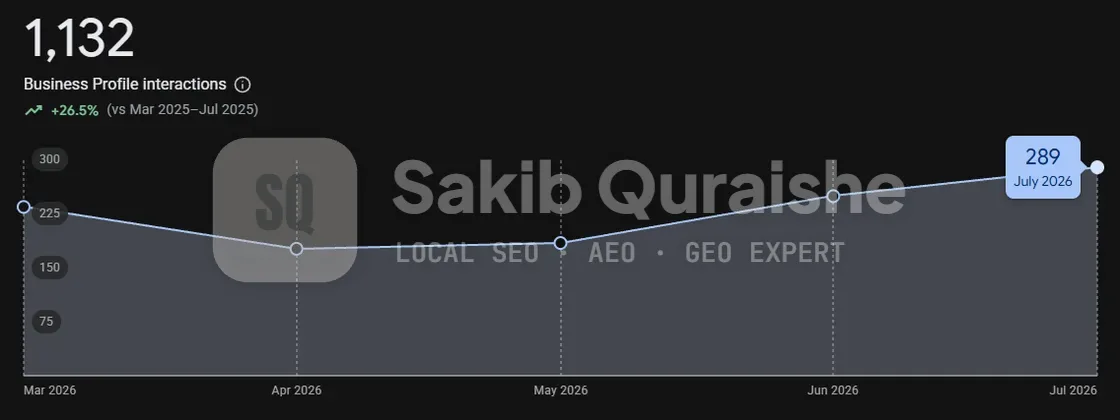 289 in July alone.
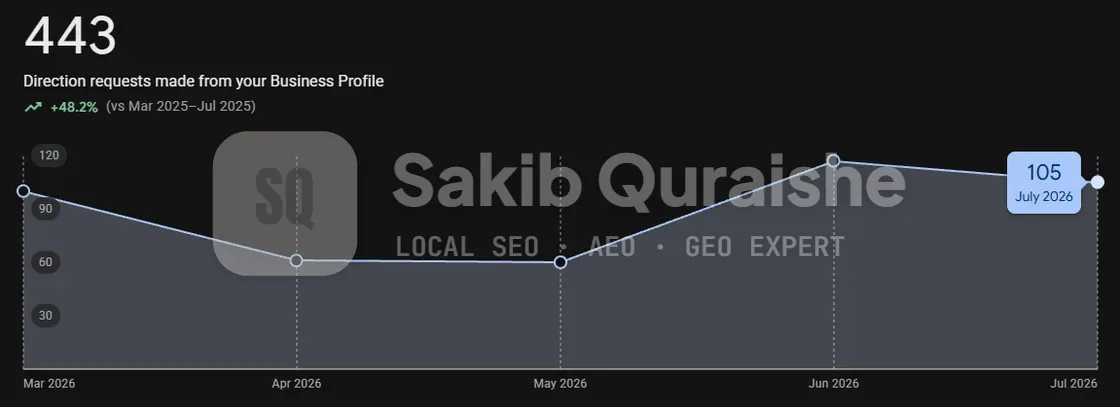 105 in July alone.
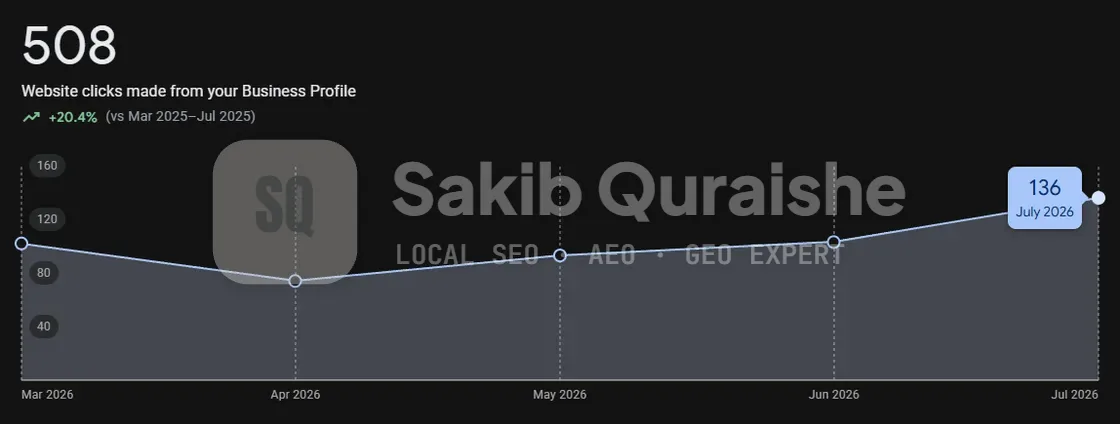 136 in July alone.
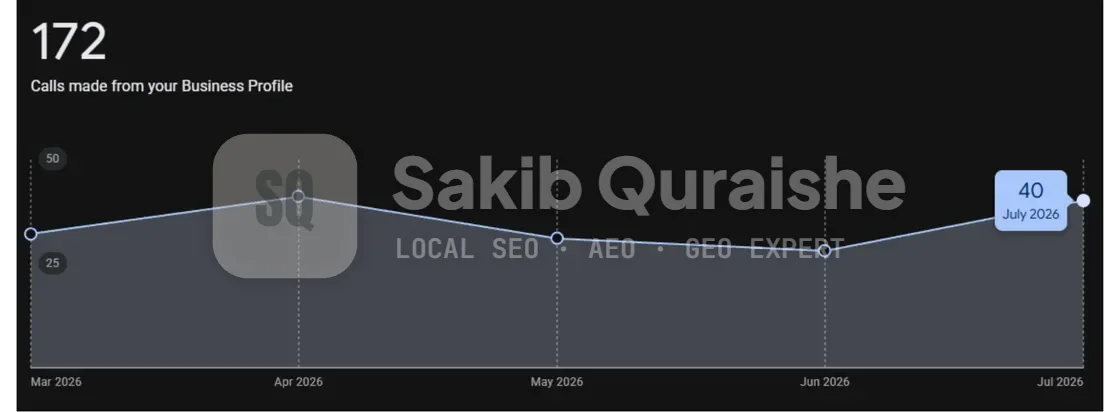 40 in July. No year-over-year figure reported.
Direction requests grew fastest. That’s the strongest local signal a profile gives: someone found the roofer on Maps, trusted what they saw, and set off or called from the road.
Website in Google Search
| METRIC | BEFORE | AFTER | CHANGE |
|---|---|---|---|
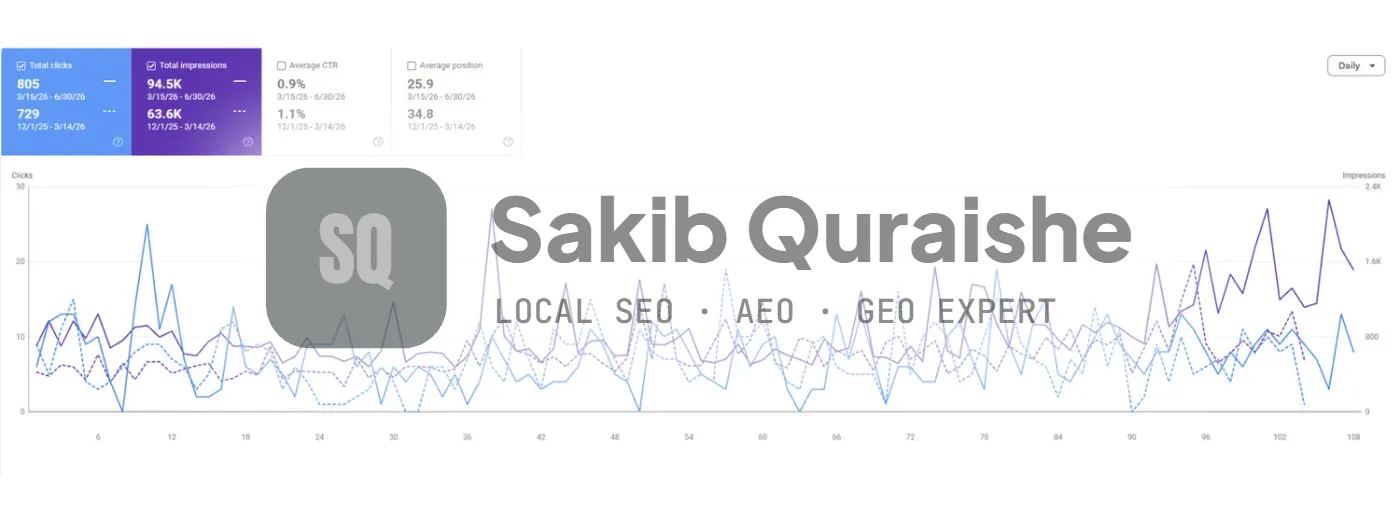
1 Dec 2025–14 Mar 2026 vs 15 Mar–30 Jun 2026. An honest, steady climb rather than a jump: deep page three to solid page three, edging toward page two. Turning that reach into clicks is my next phase.
How homeowners found the profile
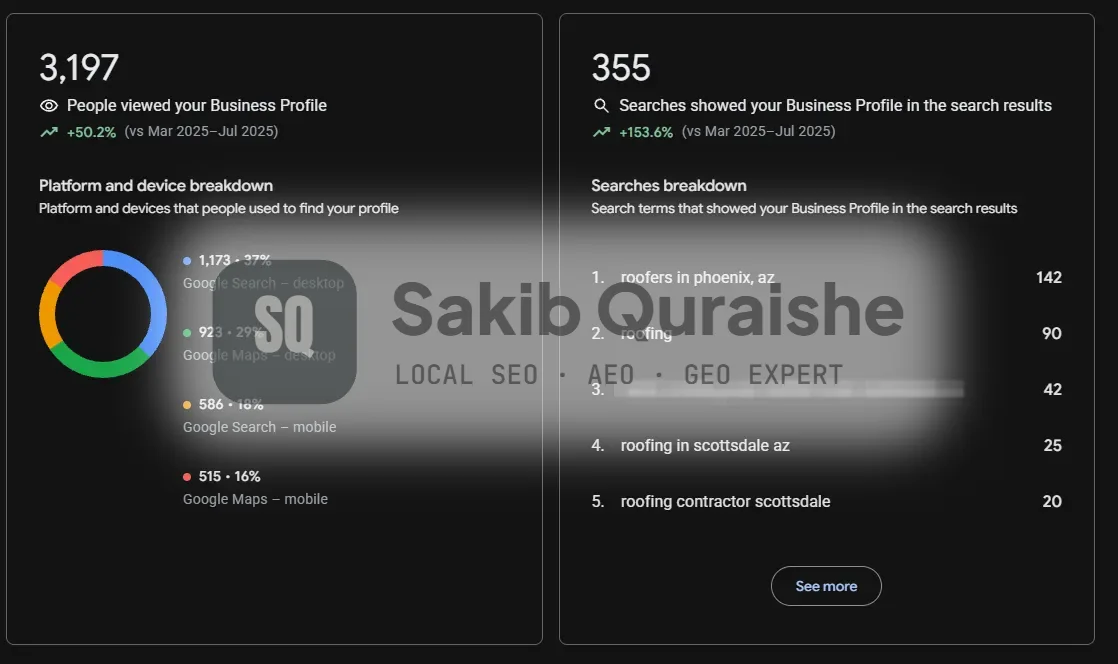
Profile views reached 3,197 (up 50.2%), and searches that surfaced the profile jumped 153.6% to 355. Maps now drives 45% of views, which I like for a roofer: Maps users are usually already comparing local options.
The top term was “roofers in phoenix, az” with 142 appearances, so the Scottsdale work is carrying into the wider metro. A branded search is now the third most common term, which tells me word of mouth is building. I’ve redacted it to keep my client anonymous.
Map grid scans, before and after
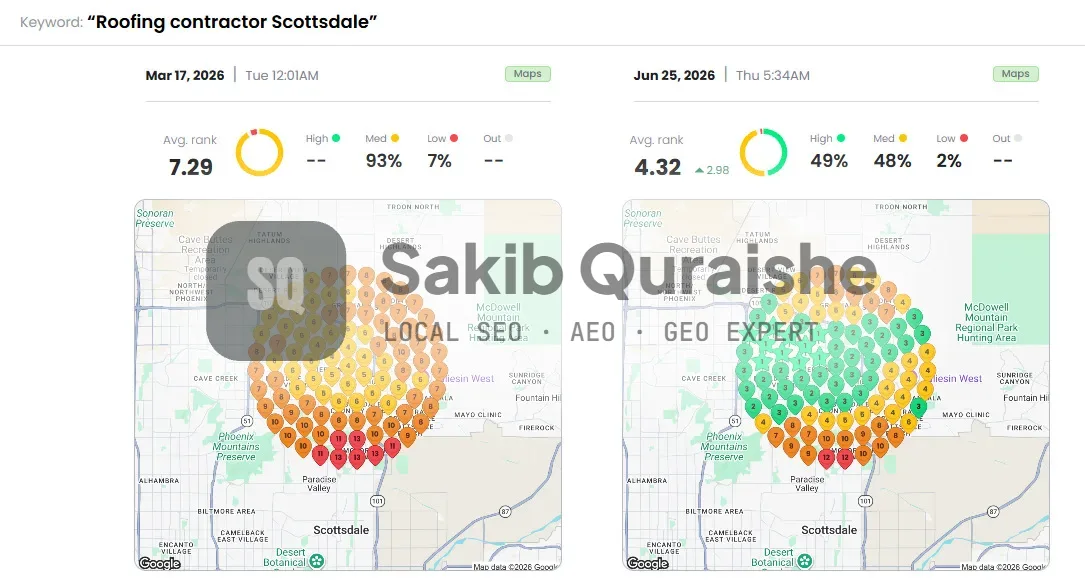
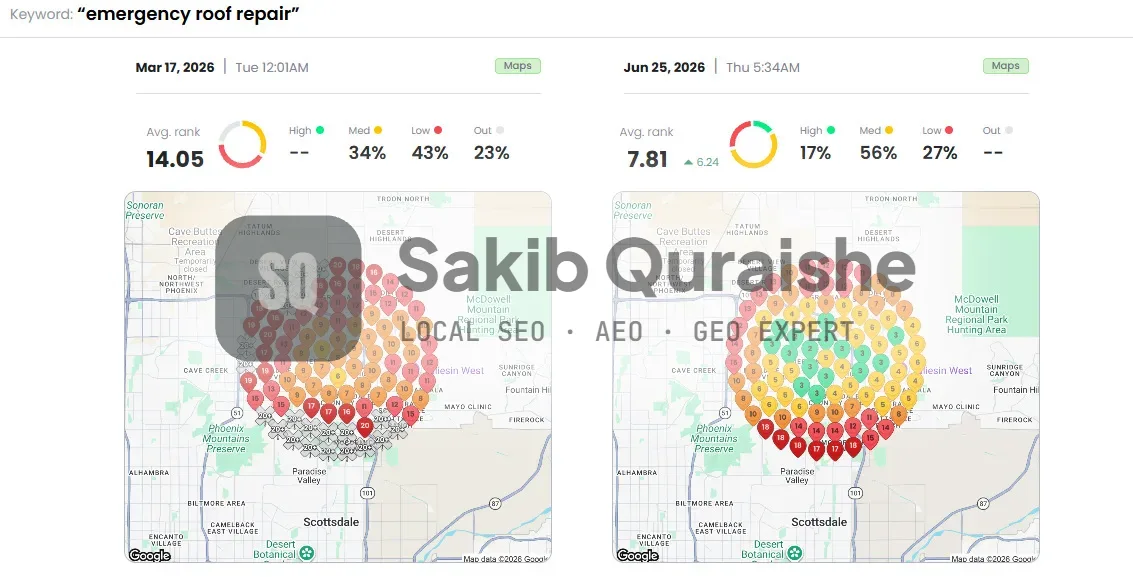
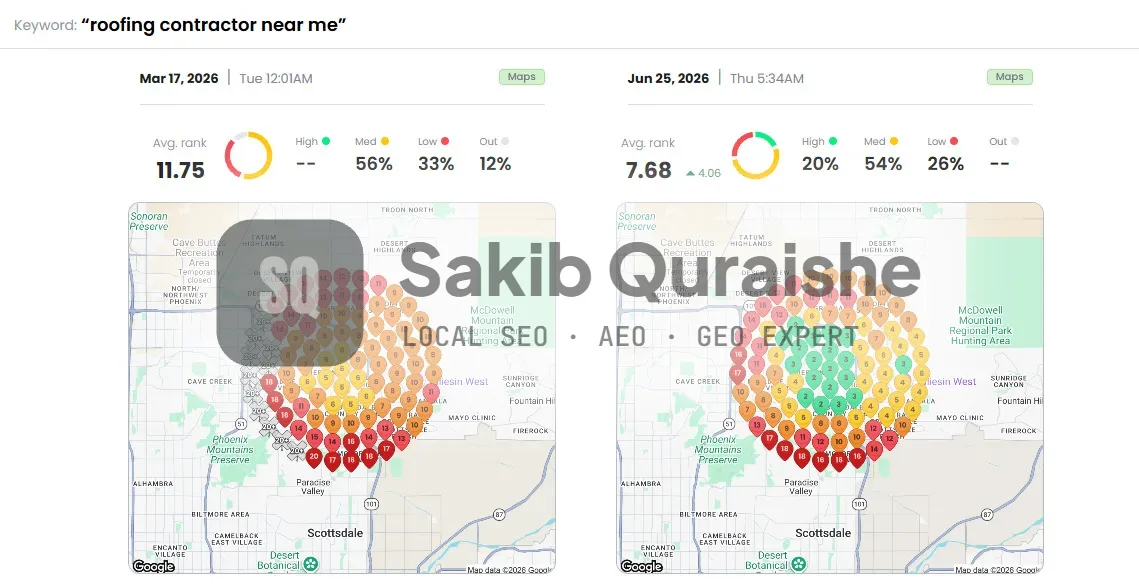
| SEARCH | 17 MAR | 25 JUN | GAIN | COVERAGE |
|---|---|---|---|---|
Most of the area couldn’t see them. The “roofing contractor near me” grid was almost entirely amber and red.
Zero top-of-map coverage. On all three core searches, not one grid point ranked near the top.
Emergency repair sat at position 14. Invisible on the most urgent, highest-value search.
The website averaged position 34.8. Real jobs and reviews, but the site wasn’t pulling its weight.
A saturated market. Phoenix is packed with roofers with years of links and reviews.
The Roofing Company SEO Searches That Moved in Both Markets
Two searches were tracked for both roofers. Looking at them side by side shows how the same plan plays out in a mid-size county versus a big metro.
The highest-intent search a roofer can win, and the biggest single jump in Arizona.
The broadest term. Both moved roughly two to four positions in about three months.
Your Roofing Company SEO Questions, Answered
What does roofing company SEO include?+
When I run roofing company SEO, I work on the Google Business Profile, service and location pages for each roofing service, schema, citations, local links, reviews and regular posting, so the roofer shows up in the Maps 3-pack and organic results when homeowners need a roof repaired or replaced.
Which keywords should a roofer rank for first?+
I start with the searches that lead to calls: emergency roof repair, roof repair near me, roofer near me and roofing contractor plus the city. Once those move, I expand into installation, metal roofing, siding and gutters if the business offers them.
How long does roofing company SEO take to show results?+
In these two campaigns, every tracked search improved within about 13 to 14 weeks. Crowded metros take longer to reach the top three everywhere, so I plan for three to six months and report grid scans monthly.
Why did the click-through rate drop slightly?+
Because each site started appearing for many more searches, including broad ones. Total clicks still went up; the average simply softened as the reach widened.
Can you guarantee my roofing company will rank in the top 3?+
No. Rankings depend on your market, your competitors and your starting point. I show real scans, set honest expectations and report every month.
Do you offer roofing company SEO to agencies?+
Yes. Both of these campaigns were delivered white-label. I work under your brand, follow your SOPs and never contact your clients.